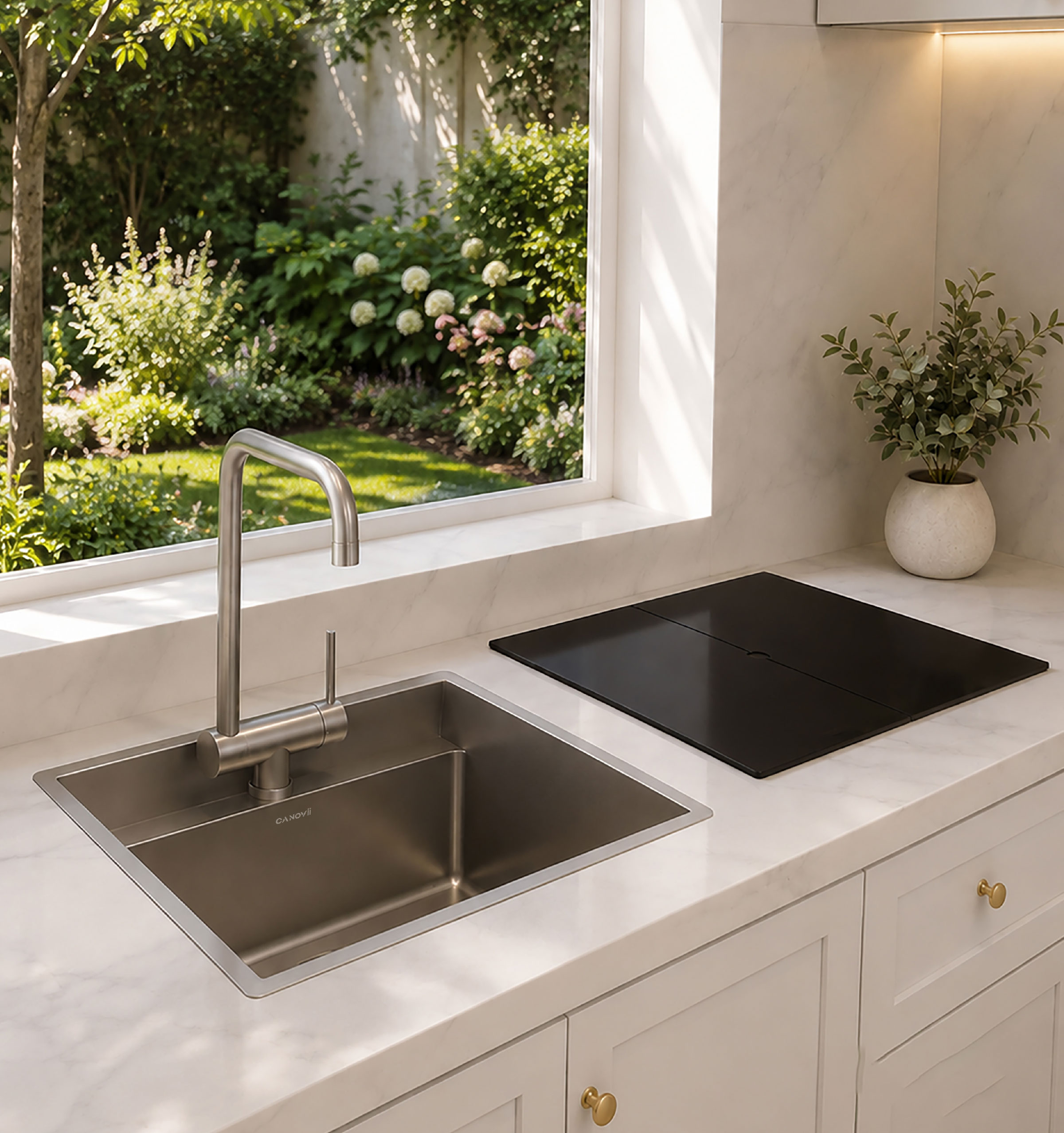


When designing a modern kitchen, few decisions impact your daily culinary routine as significantly as choosing the right kitchen sink. Among the vast array of materials, configurations, and technical specifications available today, the 16 gauge stainless steel kitchen sink has earned its reputation as the undisputed gold standard for high-performance residential kitchens.
Understanding sheet steel thickness, material alloys, structural engineering, and acoustic insulation allows homeowners to make a lasting investment. In this comprehensive guide, we examine why heavy-gauge steel matters, how commercial-grade engineering elevates residential homes, and what structural details separate standard mass-produced sinks from precision-crafted fixtures.
Understanding Sheet Metal Thickness: What Does 16-Gauge Really Mean?
In stainless steel manufacturing, the term “gauge” (abbreviated as “ga”) refers to the standard thickness of the metal sheet. A critical principle to remember when evaluating technical specs is that the gauge scale is inverse: the smaller the gauge number, the thicker the steel sheet.
- 16-Gauge Steel: Measures approximately 0.0625 inches (1.59 mm) in nominal thickness. This thick, heavy-duty specification offers maximum structural rigidity, exceptional dent resistance, and superior long-term durability under heavy usage.
- 18-Gauge Steel: Measures approximately 0.0500 inches (1.27 mm) in thickness. While common in mid-tier residential sinks, 18-gauge steel is lighter and more susceptible to minor flexing under heavy cast-iron cookware.
- 20-Gauge to 22-Gauge Steel: Measures 0.0375 inches (0.95 mm) or thinner. Typically found in economy or builder-grade drop-in sinks, these thin sheets flex easily, amplify noise, and can dent under everyday impact.
Choosing a genuine 16-gauge sink guarantees that your kitchen workstation feels substantial, solid, and completely immovable during daily meal preparation and cleanup.
True Gauge vs. Deceptive Coatings: The Integrity of Steel Mass
Not all sinks advertised as “16-gauge” deliver the same actual steel mass. A common practice in mass-market manufacturing is material manipulation, where the advertised thickness includes synthetic undercoatings or sound sprays applied over a thinner metal sheet.
At Canovii, our commitment to total material honesty is embodied in our CanuckCaliper™ verification standard. The specified gauge represents the actual, uncompromised thickness of the stainless steel sheet itself—prior to the application of any protective acoustic layers or thermal barriers. This ensures consistent structural strength across every square inch of the basin.
Structural Advantages of True 16-Gauge Construction:
- Unrivaled Impact Resistance: Dropping heavy stoneware, cast-iron skillets, or large roasting pans into a thin sink can easily cause visible rim distortion or floor denting. A true 16-gauge basin absorbs daily heavy impacts without structural deformation.
- Elimination of Disposal Flex: High-horsepower garbage disposal units generate significant torque and vibration during operation. A 16-gauge sink flange reinforced with TruNordStrong® relational support technology provides the rigidity necessary to prevent flexing and stress fractures over years of service.
- Rigid Support for Workstation Setup: Modern kitchens benefit greatly from integrated accessory tracks. If you are evaluating multi-tiered prep stations, read our comprehensive overview on workstation kitchen sinks to see how heavy-gauge steel supports sliding cutting boards and colanders without sagging.
304 vs. 316 Stainless Steel: Alloy Science & Chemistry
While sheet thickness determines physical rigidity, the chemical composition of the steel alloy determines its immunity to rust, pitting, and corrosion. Kitchen sinks are continuously subjected to tap water, acidic food residues, harsh soaps, and thermal shock.
TrueNorth Core® 304 Stainless Steel
For indoor luxury residential kitchens, TrueNorth Core® 304 stainless steel represents the ideal chemical balance. Containing approximately 18% chromium and 8% to 10% nickel, Grade 304 forms a passive chromium-oxide layer on its surface upon exposure to oxygen. This invisible barrier automatically resists surface corrosion, rust, and organic food acids under normal kitchen conditions.
TrueNorth Core® Marine-Grade 316 Stainless Steel
For outdoor kitchens, coastal residential properties, or high-salinity environments, Grade 316 stainless steel is the ultimate specification. Grade 316 incorporates 2% to 3% molybdenum into the alloy matrix, providing superior resistance against chloride pitting, salt air, and harsh cleaning chemicals. To determine which alloy suits your specific installation, explore our technical guide on 304 vs 316 stainless steel sinks.
Commercial-Grade Engineering in Residential Spaces
Professional chefs and kitchen designers choose commercial-grade construction because restaurant sinks face non-stop abuse. Bringing these commercial manufacturing standards into residential homes ensures a lifetime of reliable performance without requiring constant delicacy.
Key Manufacturing Innovations:
- SoloForm™ One-Piece Engineering: Crafted from a continuous single sheet of heavy steel, eliminating weak interior corner seams and providing a modern, seamless aesthetic.
- Laser Fusion™ Precision Welding: Advanced automated laser welding creates micro-narrow seams, minimizing post-weld grinding and preserving structural integrity.
- PliLock™ Interlocking Integrity: Components are mechanically interlocked before welding to ensure absolute alignment, rigidity, and seam strength.
Acoustic Comfort & Thermal Protection
Historically, a common complaint regarding stainless steel sinks was noise—the hollow metallic clatter of running water or silverware. Achieving a truly quiet stainless steel sink requires a dual-tier acoustic and thermal management system:
1. TaigaCore® Noise Reduction System
To neutralize high-frequency and low-frequency sound, heavy-duty TaigaCore® acoustic insulation pads are applied strategically across the exterior basin walls and base, deadening noise from running water, dishes, and disposals.
2. ChinookShield® Anti-Condensation Barrier
Temperature differences between cold water inside the basin and warm air inside the base cabinet cause condensation. The ChinookShield® thermal moisture barrier coats the underside of the sink, preventing moisture accumulation and protecting custom wooden cabinetry from water damage and mold.
Drainage Geometry & Basin Ergonomics
A heavy-duty sink must drain efficiently to maintain daily hygiene. Flat-bottom basins often suffer from standing water and mineral buildup. Utilizing the AquaHarmony® engineered drain system, calibrated basin slopes and channeled floor geometry direct water smoothly toward the drain outlet, preventing pooling and simplifying daily cleanup.
Daily Care & Long-Term Maintenance
Preserving the lustrous finish of a 16-gauge stainless steel sink requires minimal effort:
- Rinse the basin thoroughly after each use to remove food particles and soap residue.
- Wipe the surface dry with a soft microfiber cloth after evening use to prevent hard-water mineral spots.
- Avoid leaving wet steel wool pads or harsh chlorine bleach in prolonged contact with the metal surface.
Frequently Asked Questions (FAQ)
Is a 16-gauge stainless steel sink worth the extra cost over an 18-gauge sink?
Yes. A 16-gauge sink provides significantly greater sheet thickness, offering enhanced dent resistance, structural rigidity for heavy disposals, and superior noise dampening compared to thinner 18-gauge alternatives.
Will a 16-gauge stainless steel sink scratch?
Like all stainless steel fixtures, fine micro-scratches will naturally form over time with heavy daily use. However, a premium satin or brushed finish disguises these hairline marks, allowing the steel to develop a uniform, warm patina over its lifespan.
Can a 16-gauge sink be installed as an undermount?
Yes. 16-gauge steel is the ideal material for undermount installations. Its structural rigidity provides a solid, flat mounting surface that seals securely against stone, quartz, or solid-surface countertops.